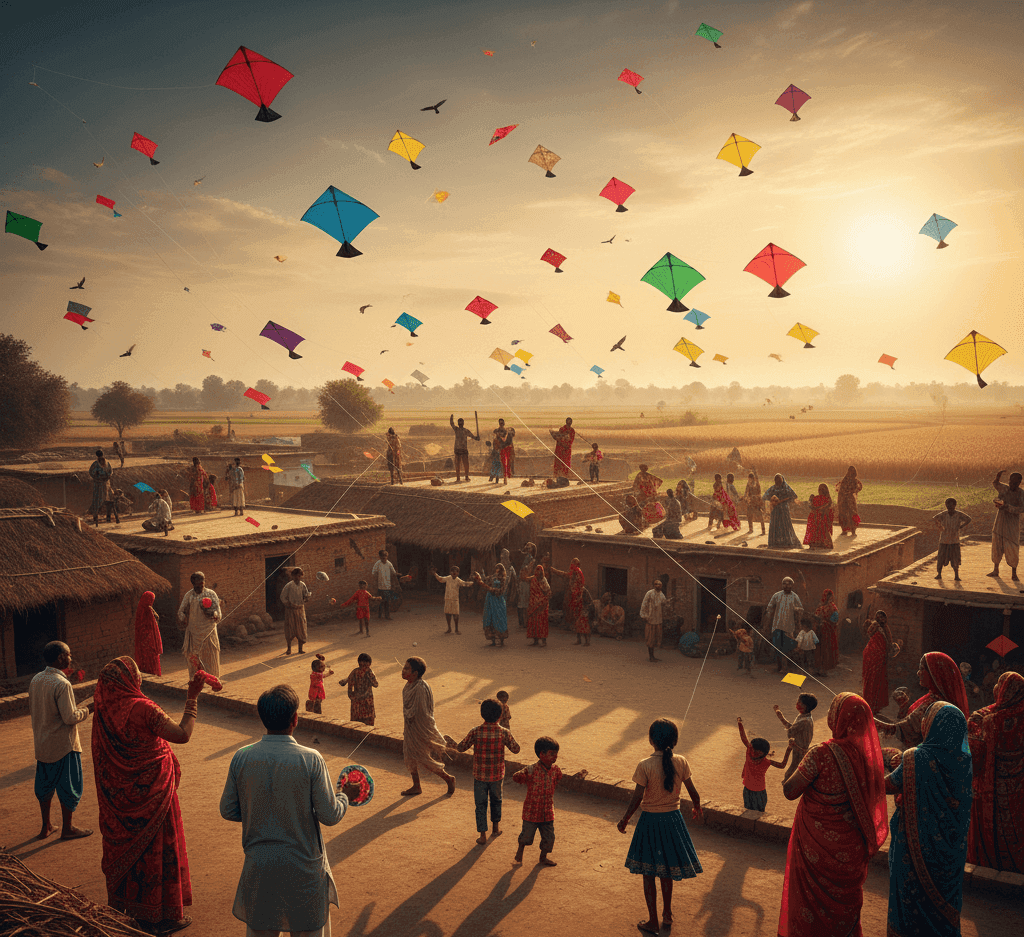
The flying kites festival was once a way to read the sky, long before it became a celebration. People looked at the angle of the string, the pull of the wind, and the colour of the sunlight on the paper frame. Each movement meant something. A sharp tug signalled a shift in the weather. A kite that refused to rise hinted at a day best spent at home.
Ahmedabad, Where the Sky Turns Into a Calendar
In Ahmedabad, the signs appear before the crowds. Shopkeepers tie sample kites outside their doors to test wind direction. Children watch which colours stay steady and which twist too easily. Even weeks before the Kite Festival Ahmedabad 2026 begins, the city feels alert to the sky. Early mornings reveal the rituals that predate competition. Men step onto terraces with spools of line, loosening them slowly to check tension. The paper rustles, and the rustle itself tells them if the breeze will hold through the afternoon. People who grew up here can tell how the kite festival is celebrated in India simply by observing these quiet routines. Visitors hear stories that have nothing to do with winning. Elders talk about years when the breeze arrived late. Or years when the sky turned a strange shade before sinking into perfect flying weather. They speak of luck, timing, and the Sun’s favour as if talking about an old neighbour.
Karnataka, Where Kites Mark the Changing Season
In coastal Karnataka, the flying kites festival carries the weight of older beliefs. It is not about display. It is about listening to the wind. Fishermen let small kites rise before pulling their boats. If a kite drifts too far left, they say the tide will be stubborn. If it steadies itself fast, they call it a good day. This is why the flying kites festival in Karnataka feels less like an event and more like a conversation with nature. People gather in open fields close to the village edges. The first kite of the season is always released by someone older, someone who has seen enough seasons to understand what each small movement means. Children run with bright paper shapes without knowing that they are participating in a tradition older than their families. When travellers ask how many kite festival in India, locals do not count. They answer with stories. Stories of fields that once stretched farther than the eye could see. Stories of kites that snapped at the exact moment the wind changed. The number of festivals does not matter. The memory of them does.
Rural Belts, Where Kites Are Still Tools Before They Are Toys
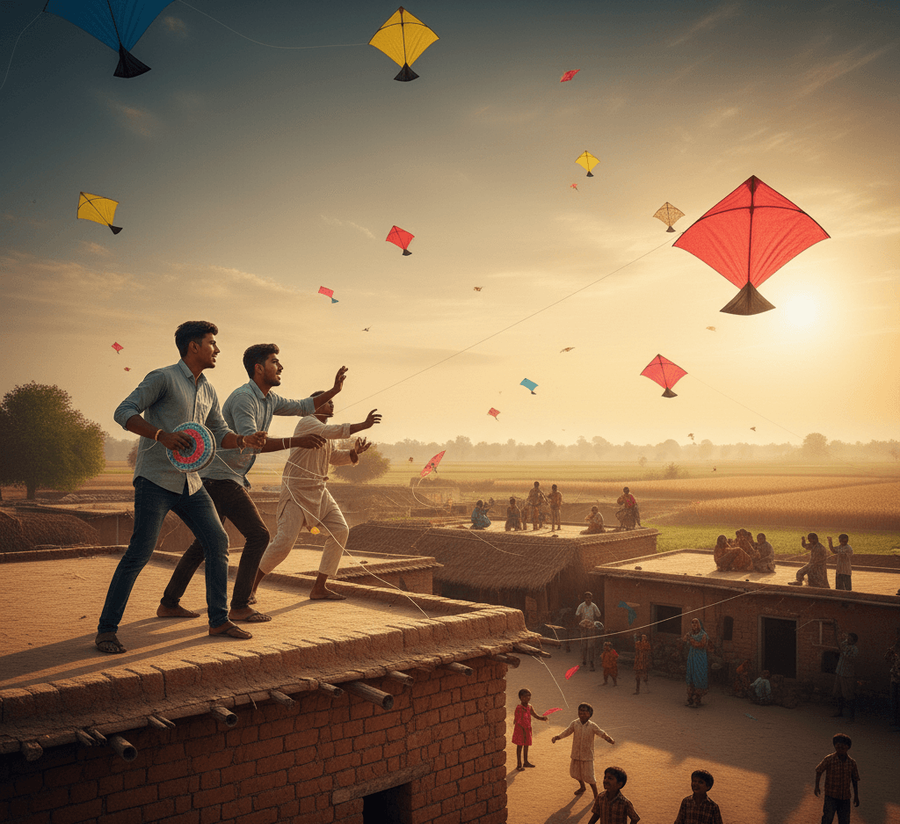
Across many rural belts, kites are treated like simple instruments for reading the sky. Farmers say a steady kite means a steady week. A trembling kite means the wind is undecided. A sudden pull means the weather is shifting even before clouds appear. Children learn by watching. They do not ask how the kite festival is celebrated in India because they see it every year without needing explanation. They watch elders tying knots with slow precision. They watch men checking the string for tiny cuts that can change the course of the entire flight. Even the sound of the thread scraping against a bamboo spindle tells them something about the day. These rituals repeat in silence. A boy climbs onto a roof with a kite balanced on his palm. A group of women steps out to watch the first flight rise above their street. A man shades his eyes and tracks the angle of the kite against the sun. None of them calls it a festival. They call it preparation.
When the Sky Dictates the Celebration
Some regions do not follow fixed dates. The festival follows the wind itself. If the breeze arrives early, kites appear early. If the sky feels heavy, the entire village waits. This rhythm confuses travellers who expect schedules. Locals say the sky does not care about schedules. It only cares about movement. People fly kites to honour the turning season. They fly to thank the sun for warmth after long months. They fly because it is the easiest way to sense change. The flying kites festival in India came from this instinct, not from crowds or competition. In small towns, a single kite rising at dawn can signal the beginning of a celebration. Children race up staircases. Neighbours shout across terraces. A spool of thread appears in someone’s hand before they even know why. The moment the first kite steadies itself, the festival begins without announcement. That is why the flying kites festival still feels ancient beneath all the modern noise, and why its meaning stays the same even when the sky looks different from one year to another.